Unknown's avatar

About ltownsdin

Author of the Spirit Lake Mystery Series

Milestones and Reader Support

Last week I was pleased to announce another milestone reached—Focused on Murder is now available on iTunes, Barnes and Noble and Kobo, as well as Amazon!

Moving past those milestones in the publishing process is rewarding, but reader reviews and support are what really thrill me. It’s easy to bury myself in writing the second book in the Spirit Lake Mystery series, especially because readers have been asking for it, but your positive comments have helped me leave my “introvert cocoon” and put myself out there to let more people know about Focused.

Here are a few examples of reader comments I’ve found so gratifying because they’re about Britt, who’s been so much fun to create:

“…The character of Britt is not your usual mystery heroine. A prize-winning photo journalist living in a small town In Minnesota, she is tough, flawed, and loving. The story brought me places I rarely enter – in books or life.” –KM

“…Britt is a wonderfully complex character and so well written you feel like you are inside her mind thinking as her: working through problems, finding solutions, and living her life. –AC

“…Following the curious, risk-taking, experienced photographer Britt into such a series of forbiddens kept me saying “One more page, one more…” The descriptives colored each scene so vividly that each adventure was amazingly brought to life.” –CZ

“…A main character I want to get to know more deeply, secondary characters that help create a place that I want to keep coming back to, and a setting so beautifully developed I want to hang out there.” –JW

As an author, there’s no higher praise than knowing people are enjoying my work. Thank you! I appreciate your reviews!

Courtesy of freedigitalphotos.net

Courtesy of freedigitalphotos.net

The Slow Movement in Social Media, or How to Avoid Getting Overwhelmed

I’ve invited Corinne Litchfield to be my guest blogger today to share some of her tips on navigating the constantly changing landscape of social media. Corinne has helped me create a Facebook author page and my blog book page. She’s organized and linked my social media platforms, and is a valuable part of the community of people I rely on to help me communicate with all of you. – LT

The flow of creativity seems to move very fast sometimes. As a writer, I have moments when the ideas for stories, poems and essays rush through my head, each demanding to be written down. When I switch gears into social media management, however, I realize it’s important to slow down: I need to ensure my copy is clear, concise and timely, and that I’m choosing the right methods to share that content. You could say I’ve become a proponent of a slow movement for social media.

It may sound crazy for a social media manager to say “slow down,” considering how rapidly news cycles are updated and how timeliness in tweeting or posting on Facebook can make or break a book’s popularity among readers. But more and more I’m seeing clients who want to jump into everything all at once: website, Facebook, Pinterest, Twitter, you name it. That’s the point when I tell them that it’s okay to move slowly and carefully, to deliberate on each element of their overall strategy before moving to the next item on their list. Otherwise they walk away with bits and pieces of information, not understanding how each piece of their platform works together to build their brand identity.

So if you’re supposed to move slowly with social media, what should you do first? How do you prioritize everything? I recently spoke at Napa Valley Writers Club about website development and social media, and established what will become my new mantra with my clients:

Start with two.

That means select two social media accounts you want to start with – whether it’s Facebook and Goodreads, or Twitter and Google+, or some other combination. Get really comfortable using the two accounts you select: learn how to post content, from text only to text+image to text+video; learn how to share content from other sources, such as a news site or blog; and build up your following and/or fans. Once you’ve mastered those two accounts, consider setting up another social media account to promote your writing. But don’t push yourself. Keep in mind that in between all those blog posts, tweets and Facebook Page updates, you need to write your next book, short story collection or poetry chapbook.

How much is too much?

In terms of time, about 15-20 minutes a day perusing social media for business purposes – meaning you’re reading (and sharing) content that’s relevant to your genre or niche – should be sufficient. If you find you’re dawdling over whether or not to share content, save the link and read it again later.

As for how frequently to post on social media, it depends. Tweets have a shelf life of approximately 18 minutes. Facebook posts last nearly twice as long, clocking in at 30 minutes. This doesn’t mean you should post or tweet more often, however – it means that you should use tools provided by Facebook and Twitter to see how your more popular posts/tweets perform, and use those as a guide for when – and what – to post. (Click on the images to view a larger version.)

Twitter, tweets, performance, social media, social media management, analysis

In the Email notifications section on your Twitter account, check the box next to “Updates about the performance of my Tweets” to get regular emails on how your tweets are doing.

Facebook, social media, social media management, reach, engagement, posts, Facebook posts

On your Facebook Author Page, click View Insights and scroll down to see the reach and engagement of your posts.

Using these tools, plus taking advantage of a dashboard service such as Buffer or HootSuite, can help you slow down and make the most of social media without feeling overwhelmed by it all.

15mins_Corinne_AD_07

Find out more about Corinne and her work in social media at her website

Are You Like Your Protagonist?

I recently read a piece by Donald Maass in one of my favorite blogs—Writer Unboxed, and he asked compelling questions about why we choose a particular protagonist. I wrote about this in a guest blog a few weeks ago, but in case you missed it, here are my thoughts.

Why do writers choose a certain type of protagonist and subject matter?

My story ideas are based on a social issue that haunts me, and then I have a rough idea of what’s going to happen. But I never know which new characters will pop up, or what twists and turns are coming, and that discovery is the most fun.

I expected that to happen, but what I didn’t expect was how creating Britt Johansson as my protagonist would change me. When I first imagined Britt, I thought I was creating someone almost the opposite of me. She’s tall and athletic, a tough photojournalist willing to make people uncomfortable to get her photos, blurts out whatever she’s feeling or thinking, and doesn’t like to delve too deeply into her own psyche.

I’d have made a terrible journalist because I would hate to ask hard questions that put people on the spot. I’m deliberate where’s she’s spontaneous, and I’m a ruminator. And yet, I wonder if there isn’t a shadow side of me that harbors some of those characteristics.

In addition to following the murder of a local coed, and getting involved in a dangerous high-stakes crime that requires every ounce of her strength and skill to make it out alive, at the core of my story is Britt’s decision whether to stay in Spirit Lake or go.

I’ve moved quite a bit in my life—my grandmother used to say I had wandering feet. I don’t wander that much anymore, but the desire is still there, and I continue to feel the loss that happens when you give up one thing to get something else.

So I created a character who longs to go and longs to stay and through following her adventures, I get to explore some of my own feelings about what that conflict has meant to my own life.

And, since writing about Britt, I’ve become much more physically active, and I take more risks. Not Britt’s kind of risks, but the kind that build confidence in small ways every day. Is there a connection? Has my inspiration inspired me? I hope so. I look forward to how else Britt might inspire me in her next adventure.

Have your protagonists changed you? In what ways?

feet (2)

Julie Williams—Drama Queens in the House

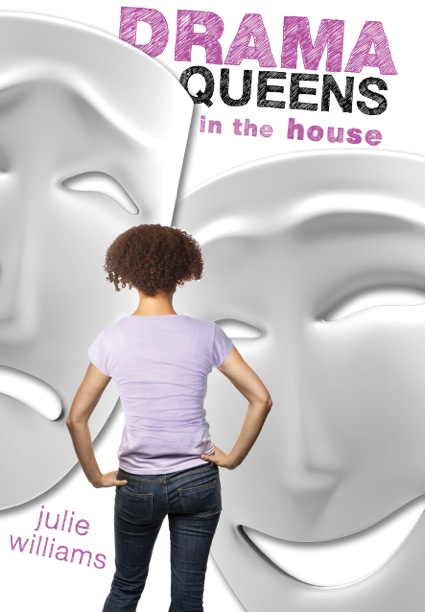
Julie Williams and I are lifelong friends and I’m thrilled to have her as a guest blogger this week to talk about her new YA novel, Drama Queens in the House. Recently published by Roaring Brook Press, it’s available on Amazon, B & N, and other bookstores.
front cover (2)

“Sixteen-year-old Jessie Jasper Lewis doesn’t remember a time in her life when she wasn’t surrounded by method actors, bright spotlights, and feather boas. Her parents started the Jumble Players Theater together, and theater is the glue that holds her crazy family together. But when she discovers that her father’s cheating on her mother with a man, Jessie feels like her world is toppling over. And on top of everything else, she has to deal with a delusional aunt who is predicting the end of the world. Jessie certainly doesn’t feel ready to be center stage in the production that is her family. But where does she belong in all of this chaos?”

What’s the most fun/interesting part of the writing process?

I love the beginnings of books. As odd as this might sound, mine don’t usually start with an idea. As the first coherent thought about a story I’m going to write, I don’t think I’ve ever said to myself (or to someone else) I think I’ll write something about _______ (fill in the blank: the loss of a parent, moving to a new state, conflicts between the whites and Ojibwe in Northern Minnesota, a big theatrical family, what it’s like to grow up in a fanatical religion focused on the end of the world, finding your voice, and so on and so on.)
What happens instead is that a character starts talking in my head. And when I realize she’s not going away and is really trying to get my attention (sometimes after a day or two — sometimes it takes a lot longer), I start trying to get what she’s saying down in my morning journal writing practice. This can be fragments of a conversation. Sometimes it’s an internal monologue. Or it might be a full-blown scene between this new character and someone else in the story I haven’t met yet. Usually the character reveals quite a bit about herself really fast and that’s what starts the plot going. If, for example, my as yet unnamed character is wading out of a cold autumn lake where she’s just intentionally destroyed her mother’s prize speed boat, and she’s calling her mother the Crazy Woman, I’ve got a pretty good idea of setting and main conflict. I don’t know at that point whether the character will run away or step up to confront the situation. That knowledge will come the next time I open up my notebook, take out my pen, and try to get the words down.
The down side of enjoying this part of the process as much as I do is that I have a lot of story beginnings that have never been developed into books. The up side is that I have a lot of imaginary friends.

What’s your approach to developing the plot?

I’m a big re-reader. If I love a book, I’ll read it over and over and over until I’ve practically memorized it. These reading habits began when I was very small and have grown and developed over a bunch of years of being a voracious reader. I like reading plots that feel organic, character-driven. I’m not a big fan of books that are plot-driven. When I’m reading them, I get anxious and irritated, and I usually skip to the end and read that and then go back and read in a kind of scatter-gun fashion through to the end to get the gist of the story. And I never go back and re-read a plot-driven novel. My love of re-reading informs the way I write. If the character comes to me in a particular setting and with a clear dilemma, then often the final scene of the book will pop up sooner rather than later. And that’s something to write toward. Or maybe it would be more accurate to say, it’s what the character is moving toward but she doesn’t know it, does she? Life rarely moves in a straight line. Even clearly delineated problems have a way of turning inside out and upside down and sometimes ending up the best thing that ever happened to us. I like, when I read, being reminded of this spiral dance we go through over and over and over, with problems that become solutions and goals that disintegrate and become new goals. So that’s what I like to write. The trick when you write that way is to keep track of all the plot points that emerge and work some magic in the rewriting stage of the process trying to get the action and movement of the story just right. That said, if you are a reader who adores plot-driven novels, you probably won’t like my books.

What’s your take on rewriting?

Rewriting is at once a gift from the gods and a pain in the tush. If I’m still in the story development creative flow stage, rewriting anything is difficult and painful and often not very effective. If, however, I’ve done most of that writing, have taken a break from the manuscript, and come back to it with fresh eyes and hopefully some wonderful notes from a trusted reader or editor, then the rewriting process becomes an art in and of itself. I like to view the rewriting process as a form of collage or assemblage (like the visual artwork that I do). When I’m able to get into that mind-frame and enjoy the jigsaw puzzle nature of tightening and reorganizing and fleshing out and paring back the story, then rewriting is downright fun.

Julie Williams

Julie Williams

Julie Williams is also the author of the young adult novel ESCAPING TORNADO SEASON: A Novel in Poems. She has published in many small press journals and was nominated for a Pushcart Prize. For twenty years she was an adjunct professor at California State University, Northridge teaching for the communication studies and theater departments and retiring in 2003 as the Assistant Director of CSUN’s Educational Opportunity Program. She and her husband live in Minnesota. Say hello to her on Twitter @JulieKWms2013 and check out her blog: http://juliewilliamsimagesandwords.blogspot.com/
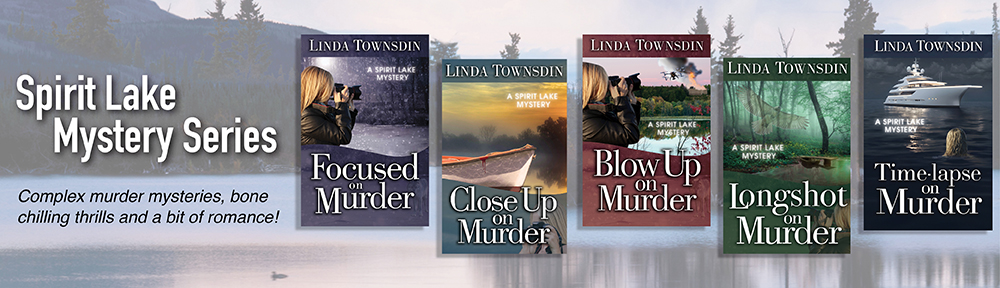
New Focused on Murder Q & A

My dear friend Julie Williams did a Q&A with me about Focused on Murder over at her site.

I hope you’ll check out Julie’s lively and colorful blog site, and info about her new novel. I answer questions about why I write what I write and whether my protagonist is like me.

Do you and your protagonist have similar qualities, quirks?