Get Real with your Writing

Knowledge and memory are okay, imagination is great, Google is primo, but hands-on experience is hands-down the best way to get real with your writing.

Most people know this, but how many writers live it? The best ones, I’m guessing. I’m a reticent person, a borderline introvert, and imagination is my favorite tool. All I have to do is travel to my own head. It’s great for inspiration, but when real-life details are needed, when knowledge, memory, and Internet search engines don’t quite cut it, it’s time to interact with the real world.

Sometimes all you have to do is seize an opportunity.

For example, friends wanted to show me their restaurant remodel before the grand opening. We started the tour through the dining area with its stunning textures and artwork. Then we checked out the brand new stainless steel kitchen and my inner eye—always tuned into my writing—popped open.

Coincidence or something else?

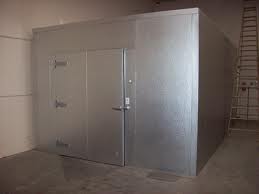
In a scene in my novel, my protagonist is locked into a restaurant walk-in freezer. When creating the scene in my imagination, the kitchen area looked similar to the one I was currently touring, but the freezer wasn’t quite like this one. I’d even Googled walk-in freezers, but looking at the one standing before me opened up a novel way to show how my protagonist couldn’t get out, even with an emergency button.

My friend shut me in and my chest tightened, goosebumps rose on my arms. Even though I knew I could punch the button and open the door, the feeling of what it would be like to be enclosed in an ice cold box unnerved me, if only for a few seconds.

Do you have examples of how getting out of your head and away from your desk has brought your scenes to life with real details and visceral emotions? I’d love to hear them.imagesCAN9WY1A
The Boot Camp Approach to Writing Discipline

What if, instead of butt in the chair, trusty cup of coffee, perfect space and muse perched above your laptop while you sit for a specific amount of time writing your novel, you take on multiple challenges simultaneously and get your butt kicked? In a good way.

Shoehorning everyone into that old-school scenario no longer works for most of us in today’s short-attention-span culture. That’s why I’m using the cross fit/boot camp/functional fitness method of writing practice.

In my physical workouts, we never do the same thing twice. We don’t concentrate on one muscle for sustained periods, slowly repeating the same movements. We repeat, but almost always at a rapid pace. We get our heart rates up, rest, and keep going until we can’t anymore. We go through lots of different activities in different sequences to keep our minds engaged as well as our bodies. We have to count. Sometimes we work with a partner or a team and sometimes we’re on our own, at our own pace. We get tips on how to feed our muscles through good nutrition, and coaches offer motivational advice. We don’t know what to expect on any given day, but we know it will kick our butts and will be well worth it.

How it translates to my writing practice

This morning, I checked FB, email and Twitter, and honed in on a couple of blogs. One gave me ideas for a creative process to give my writing a boost and a branding site helped me with a strategy for publishing my book. I wrote a scene in one of the novels I’m working on and edited a chapter in another. I wrote a review of a friend’s book on Amazon and commented on a blog post by another. I wrote this blog. After that, my brain turned to jelly so I stopped.

With this method, I work hard and produce results without burning out on one project while neglecting others. I’m constantly getting new ideas and am stimulated to get out of my comfort zone and try new things.

There’s more than one way to work those writing muscles, and for me, surprising myself is what makes it fun. What works for you?

A Story’s Setting

Why do so many writers set their stories in hometowns, even if they haven’t lived there for many years? Because in those formative years, whether small town, city or suburb, so many of life’s firsts happened—when we were most aware and all our senses alert.

After nearly a lifetime of experiences, the first ones are still seared into my soul:

  • First smell of lake. Skin puckered and eyes bloodshot from staying in it from morning till dark, you smell like lake too. You are lake
  • First love. You grin so hard and so long your jaws ache, you kiss so hard your mouths bruise
  • First disappointment when he doesn’t show up; first heartbreak when you realize he’ll never show up
  • First taste of sugary doughnuts your palsied great-aunt Emma made in her kitchen. You thought she was an angel because she wore a white apron, white kerchief and lived in a cloud of white flour
  • First loon’s call. You think it’s calling to you, and it is. It’s all calling to you—the breeze unsettling the birches, canoe paddle slapping the water, conversation of Mergansers floating under the dock, a peeper chorus
  • First reflection.lake

I hope this blog post prompts a few memories of your own remarkable first experiences. I’d love to hear them…

My Mother was a Hummingbird

photo by Amanda Delsohn

photo by Amanda Delsohn

My mother was a hummingbird.

Taking quick sips of coffee,

gesturing with child-size hands,

punctuating sentences with drags of an ever -present cigarette,

she darted in and out,

her thoughts flying past so quickly,

they’d disappear before you could grab one.

High strung, nervous was how slow minds

with lumbering bodies described her.

And all the while her wings danced circles around them

leaving behind microscopic feathers for calling cards.

I sense her sometimes now

as she darts into my atmosphere,

vibrating at the speed of light,

a different species on an alternate plane.

She hovers near me,

I reach out and hold her tiny body in my hand,

her speeding heart stills,

and we rest in each other.

Next Big Thing Blog Tag

Happily, my dear friend, the talented writer and artist, Julie Williams, tagged me in the Next Big Thing interview series. It’s been called an international tag game among writers. One writer tags another writer to answer interview questions about an upcoming book or other literature project. Here are my answers:

What is your working title of your book?

Focused on Murder –A Spirit Lake Mystery

Where did the idea come from for the book?

I wanted to write about Northern Minnesota, where I spent much of my childhood. So far, I have three Spirit Lake Mysteries in different stages of development. Focused on Murder is completed, Close up on Murder is being revised, and I’m nearly finished with a second draft of Exposed.

What genre does your book fall under?

Traditional mystery/thriller

Which actors would you choose to play your characters in a movie rendition?

When I read, I prefer to visualize the characters in books without too much detail from the author, but Claire Danes’ character from Homeland comes to mind for Britt, only taller and physically very fit. Adam Beach would be great as forest ranger, Ben Winters.

What is the one-sentence synopsis of your book?

When photojournalist Britt Johansson stumbles across the frozen body of a co-ed in the wilds near the US/Canadian border, it sets her off on a hunt for the killer, putting her into the crosshairs of an international crime ring investigation.

Will your book be self-published or represented by an agency?

I’m ready to make this happen, and I’m open to all possibilities.

How long did it take you to write the first draft of your manuscript?

The first draft took about a year. The second draft has taken another year because I stopped to write a first draft of Exposed during NaNoWriMo.

What other books would you compare this story to within your genre?

I like Steve Hamilton, John Sandford, William Kent Krueger, Louise Penny, Denise Hamilton, Kate Atkinson and Jim Lynch. Jim Lynch isn’t in my genre, but his characters and settings are wonderful.

Who or what inspired you to write this book?

I love Northern Minnesota and wanted to pay homage to the Native American culture of that area, the weather, lakes, small towns and people. It’s my way of keeping in touch with my roots.

What else about your book might pique the reader’s interest?

Photojournalist Britt Johansson will push the limits to keep the bullies of this world from winning. Ben is a forest ranger dedicated to protecting the national forests and all the creatures in it. Too often, that means keeping the two-legged creatures from using the forests for their dirty deeds.

My books are also about family and community—not always pretty. I’ve chosen a small-town setting because it’s a microcosm, but shameful secrets and selfless actions happen among humans everywhere, city, suburb, or slum. Even though my mysteries are about the horrible things people can do to each other, they’re also about the everyday heroes who tip the balance and enhance our lives—the people who pay attention to us, see our flaws and love us anyway.

I hope you’ll check out the excellent authors I’ve tagged, members of Sisters in Crime and my mystery critique group.

http://junegillam.com/blog/

http://www.micheledrier.com/