Inspired at Squaw Valley Writers Event

I attended a Squaw Valley Community of Writers Summer Literary Event this week. The hundred or so attendees at the Olympic Village Lodge sat at tables and chairs facing the raised stage and podium. Large windows that stretched from the floor to the ceiling overlooked aspens and pines and beautiful sunny skies. With notebook open and pen ready, I eagerly anticipated the event.

The day-long panels and presentations left me with a full notebook and a drained brain. The first two presentations on memoir and short story were inspiring, but the last panels on West Coast literary magazines and epublishing felt like taking medicine. I knew it would help me, but it tasted bitter.

Hard to Swallow

The literary magazines represented in the panel receive hundreds of submissions for each issue. They always want to showcase name writers for added cache and in some cases publish short stories, essays, poetry, photography and art all in one issue. The editors want relevant subject matter that fits their taste and pieces they choose must complement the others, similar to the way an art gallery mounts a show. There’s usually a theme. And the online journals are great, but some publish only once a year. The key is to be very good and to have the good luck to be writing about a timely subject that also connects with the editor’s interest. Simple, right?

The epublishing panel was made up of publishers and agents who offered practical information to help writers make informed decisions about whether they want to let Amazon give away books for 99 cents that they’ve worked on, sometimes for years. They talked about the poor editing and low quality of books glutting the marketplace. The panelists suggested several must-read articles. For example, Letter from Scott Turow: Grim News. Also, The Shallows: What the Internet is doing to our Brains by Nicholas Carr.

Hardly the stuff of inspiration, but when I penetrate that magic door of being published, I’ll be happy to have the knowledge shared at Squaw rather than popping my bewildered head out of the sand when it’s too late.

On the Page

Listening to writers talk about what happens on the page was much more interesting to me. The first speaker, John Daniel, talked about truth in writing memoir. His advice is something any writer would be wise to employ in nearly anything they produce.

  • “Write for yourself. Write because there is an area of your life you are not clear about. Write to see it in fuller light. You are at odds with yourself and you write your way to some understanding.”
  • “It’s not about what you’ve done but what you do with what you’ve done—on the page.”
  • “Honesty is the only policy in writing a memoir worth reading.”

I’d like to take that one step further and say that honesty in writing anything is key. The kind of honesty that comes from knowing what your own motivations are and if you don’t know, to keep searching.

Even if some of the sessions were reminders that the publishing world is shifting under our feet and no one really knows what to expect, I’m glad I attended. And I was inspired by the setting and the presentations.
By the way, if you want to read or write some fun Flash Fiction, check out the Writer Unboxed contest. I’ve posted my second one this week. If you like it, or any of the others, click Like!

Inspiration Comes in Three’s

The first inspirational boost I received this week was a blog by Kristine Kathryn Rusch sent to me by a friend who knew I was struggling with making changes to my mystery after it was critiqued by an editor. If any of you are now or expect to go through the critique process, Rusch’s blog will set you free, especially if you are unpublished and vulnerable and hell-bent on perfection. By the time I finished reading Rusch’s blog, I was ready to let go of some of my anxiety. In fact, I immediately wrote a flash fiction story for Writer Unboxed. I wrote it, quickly edited and sent it—a big deal for a person who has been working on the same two short stories for several years trying to get them just right.

The second nudge

I read a piece by Andrew Porter in Glimmertrain, a literary magazine that’s been publishing short stories since 1990. Porter wrote about how writers have a tendency to discount their early work and then told about how a story he’d written years earlier, once unearthed, went on to win awards and became his most successful piece to date. His article reminded me that I have a box of old stories I haven’t looked at in years because I assumed they couldn’t possibly be relevant now. His article inspired me to take a look at those early efforts. I hope you’ll read Porter’s article and revisit any work you might have stuck away in a drawer. Who knows? Maybe a gem is hidden there.

Rooting through my memory archives 

After reading the Rusch and Porter articles, I recalled a Joan Didion interview discussing her famous book, Slouching Towards Bethlehem, gathered from articles she’d published in a number of other places. She said they were never intended to be compiled into one piece and she did not consider it her best work. They were articles written for money usually on deadline and not labors of love.

The combination of those three articles reinforced my belief that as in most things in life, all we can do is our best and then let go of the outcome. Whether what you’ve written is different than the current trend in publishing, or because you wrote it years ago, or have never thought of compiling previously published freelance articles, I sincerely hope this blog post may help inspire you today.

“Wild” Stayed with Me

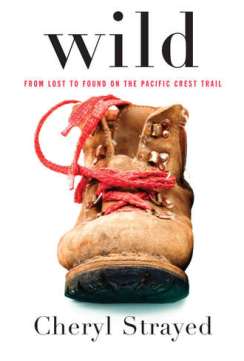
Everyone’s writing about Cheryl Strayed’s bestselling book, Wild, From Lost to Found on the Pacific Crest Trail. Oprah even made it the first selection of her newly revived Oprah’s Book Club 2.0. Time magazine did a piece on her column in Rumpus, and Poets and Writers magazine interviewed her in its March/April edition.

Why all the buzz?

In Wild, Strayed attempted to come to terms with her beloved mother’s death by hiking the Pacific Crest Trail from the Mojave Desert through California and Oregon to Washington State. She set out alone at 26 with no experience as a long-distance hiker on a dangerous journey that ultimately helped her to heal. She battled the elements, endured blistered feet and scary encounters with two- and four-legged creatures, all while carrying a massive pack on her back.

My respect for her grew page by page as she stoically moved through each setback, planting one foot in front of the other, duct-taping her sandals, doing without food and water when she ran out, and sometimes being saved through the kindness of others.

Faith and Denial

Strayed believed absolutely that her box of money and supplies—pre-packed by her and sent by friends—would be at the right destination at the right time to sustain her along the trail. She expressed concern that bad weather might stall her arrival, or she might need to reroute, or even get lost, but she never doubted that her box would be there or even that she might not have remembered to put something crucial into the box when she packed it before setting out. And when those things did happen, she figured out how to manage. I don’t want to give away too many details because each one is an interesting part of her journey, but Strayed used her last money to buy an ice cream cone. That’s faith with just enough denial to keep going.

Fearless Honesty

I was awed at the physical risks she took as a young woman alone in the wilderness, but her fearlessness in openly talking about her life was nothing short of remarkable. To put her vulnerability, darkest secrets, deepest hurts, even her callous treatment of others under such an unrelenting light is not something most of us could do.
Strayed’s book set off a string of memories about my own life at 26, my daughter’s age now. Reeling from my father’s death and a little bit lost, I embarked on my own, much less dramatic but still courageous journey into adulthood.

Strayed’s book reminded me it’s never too late to recapture some of that youthful faith and fearlessness. I can open my heart a little more, be more vulnerable, and look at some of what I might still keep locked in its own secret room. If the author’s example is any barometer, it turns out it can’t hurt you, it can only help.

Slaves to Time

I’ve read Graham Swift’s essay, “Words Per Minute,” in Sunday’s New York Times book section three times.

Swift talked about the slowness of the craft of writing a novel compared to how quickly we read them. He said many people say they have no time to read, an anomaly when technology was supposed to create more leisure time. He says “saving time has made us slaves to speed,” but that “the absorbed experience of a novel actually removes us from the tyranny of our sense of time.”

As a writer who has been working on a couple of as yet unfinished novels for several years now, the essay made a big impact on me. I’ve felt a growing sense of the need to hurry. Some writers can finish one or even two novels a year. Others like Swift take years to finish a novel and prefer doing it that way. He called a novel “a little life within a life.”  That phrase bloomed in my imagination.

What Swift’s essay means to writers like me

Looking at the writing process as creating a little life within a life brought a few questions to mind. Do we love losing ourselves in our writing for hours? Do we enjoy learning about the craft of writing? At the end of a writing session do we feel productive and creatively satisfied? Or at the very least, have we had fun?

For me, the answer is usually yes. I feel successful when I know I’ve written a good scene or even just a good sentence. I don’t think about whether the hour I labored will be read in a flash or even if it will ever be read. I’m not saying I don’t think about that. I do, just not when I’m engaged in writing.  Swift’s essay reminded me not to get caught up in other people’s definitions of success.

This is Swift’s ending paragraph. I’ve pinned it to my bulletin board:

“I’m not disheartened by the thought that what takes me years to write may occupy a reader for just a few hours. To have made, perhaps, a benign intrusion into someone else’s life for even such a short duration seems to me quite a feat of communication, and if that communication becomes for readers not just a means of passing those hours, but a time-suspending experience that stays with them well after they’ve closed the book and that they might one day wish to return to, then that’s as much as any novelist can hope for.”

I hope you’ll read his entire essay. If you’re a reader or a writer it will remind you what an important part you have in the alchemy that happens between writer and reader.

Graham Swift won the 1996 Booker Prize for “Last Orders.” His most recent novel is “Wish You Were Here.”

Six Writing Books that Deliver a Triple Whammy

I’ve written about when to step back from devouring how-to-write books like you’re cramming for a big exam. Now I’d like to mention six books on writing that have kept me moving forward through the years. Many books on craft have been invaluable resources, but I’m not listing them here, because they’re already on most writers’ lists.

The following books woke my spirit when I first read them years ago, along with Natalie Goldberg’s Writing Down the Bones and Anne Lamott’s Bird by Bird. They inspired me at a deep level and set me back on course whenever I was derailed. These are just a few:

The Artist’s Way by Julia Cameron. It’s one of the first I read that was a triple whammy of self-help guide, spiritual practice and specific tasks. She suggested writing three stream-of-consciousness pages every morning. As a result, I’ve been doing morning pages for twenty years. I feel unmoored if I haven’t done them before starting my day.

One Continuous Mistake by Gail Sher. Sher said, “Staying focused on who you are (with all your faults) requires maturity, perseverance and tremendous self-compassion. Act like and treat yourself as though your mind were joyful, kind and big—as though it were radiant, unlimitedly friendly and large. In reality, your true nature is such and if you treat yourself this way, you just may rise to the occasion.” It’s so easy to let negative thoughts creep in, and Sher reminds us to be our own champions.

If You Want to Write, A Book about Art, Independence and Spirit by Brenda Ueland. In her preface Ueland said, “Be Bold, be Free, be Truthful.” Simple words that can take a lifetime to achieve.

The Passionate, Accurate Story, Making your Heart’s Truth into Literature by Carol Bly. Her advice discusses writing in a moral, political and emotional context.  

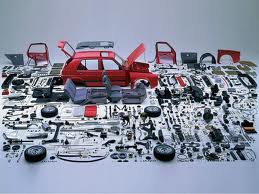
The Spooky Art by Norman Mailer. Best advice on what to read when you’re in the middle of writing a novel. Mailer said, “It’s disturbing to read a novelist with a good style when you’re in the middle of putting your work together. It’s much like taking your car apart and having all the pieces on the floor just as somebody rides by in a Ferrari.” I understood exactly what he was talking about even though I’ve never taken a car apart.

Writing Alone and with Others by Pat Schneider. Schneider started Amherst Writers & Artists writing workshops thirty years ago on the principal that teaching craft can be practiced without damage to the creative spirit, a writer is someone who writes, and every writer has a unique voice. I’ve written about my wonderful experience of attending an AWA writer’s group in this blog.

I’d love to hear what books on writing have inspired you on your writing journey.