Confuse Your Writing Muscles

I’ve been attending Kaia F.I.T., a women’s exercise program three mornings a week and am now on my fifth week. The philosophy is to confuse the muscles for improved strength and tone. You won’t find giant exercise machines jammed into the room. Sometimes we work with jump ropes or resistance bands or kettlebells or even huge tires. We run, do lunges, sit ups, squats, pushups and all variations of body work, sometimes individually, or with partners, and we often move from station to station, constantly changing from one type of exercise to another. The sessions work our brains as well, keeping track of variations in sequences and repetitions. Afterward, my body aches and yet I feel great because I’ve done something I didn’t know I could do. And I’m getting stronger every day.

What does a woman’s exercise program have to do with a blog about writing? I wondered what would happen if I applied the same philosophy to confuse my writing muscles.

Writers are advised to stick to a writing routine and never let anything deter us. But what if we mix it up and create a writing schedule that changes direction at intervals? I’m going to try it for one week and see what happens.

For example:

  • If you always journal in longhand at 7 am, head to the laptop and do a prompt or write a nonfiction piece
  • If you’re working on memoir, mystery, romance, literary, sci fi, historical, or poetry, do something entirely different like postcard fiction or flash fiction for twenty minutes
  • If you always write alone, call a friend to write with you
  • If you don’t have any writing friends, join a group
  • If you’re in a group, go on hiatus
  • If you write at a desk, take your laptop to the sofa or stand at a counter
  • If you’ve never done NaNoWriMo before, do it. You can start anytime

After a week, check in with yourself. Have you stretched your writing muscles? Are they a little rusty from disuse? Does it feel good to surprise yourself?

In the effort of full disclosure, I can’t take credit for jumping into a rigorous exercise routine all on my own. My daughter talked about how much fun it was and how all ages of women were involved. She encouraged me and invited me to a couple of tryout sessions, and when I was discouraged, she told me everyone had a hard time at first and that I was doing great and she was proud of me.

And that brings me to my last suggestion for today’s blog. If you don’t have someone in your life who pushes you a little, encourages you and believes in you, find someone like that or be that person for yourself.  Now get out there and get confused!

Change of Seasons

This morning I did a reverse spring cleaning, washing and airing out all my bedding. Fall hasn’t arrived yet in California but it’s right around the corner. I thought my purpose in stripping the bed and washing comforters was to prepare for a new season, until I was struck by the symbolism of it all.

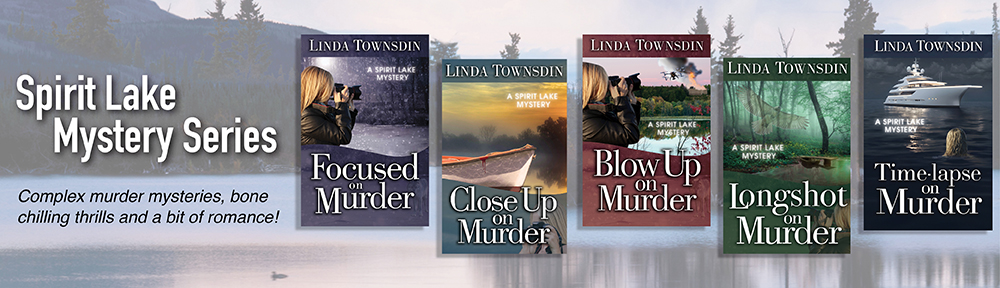
I’ve nearly finished my final draft of Focused on Murder and am gearing up for the next step  by mentally clearing away the past season of writing and editing  to make space for a new effort: Publishing my book.

Frightful

Publishing a book is one more step in a long list of scary transitions that must take place to get a book from conception to making its way into the world.

It used to be easier: Do your research.  Find agents who handle your type of book, send queries and wait. If agents like your pitch, they ask to see the first chapter and a synopsis. Months later, you might get a letter saying it wasn’t what they were looking for. Or they might want to take you on as a client, but then might not be able to sell your book to a publisher.

The outcome is out of your control so all you can do is keep trying to get one of the gatekeepers to let you in the magic door. It wasn’t easier to get published, just less complicated when the outcome of your work was decided by someone else.

Change of Focus

Today, an almost overwhelming smorgasbord of options exists to get a book published. Of course, tackling anything new is daunting but diving under those clean sheets and comforter and hibernating rather than taking on the unknown was not an option. Instead, I chose to look at it with a certain alert curiosity and an expanding mindset that:

  • Turns toward a new experience with anticipation
  • Welcomes a chance to learn something new
  • Loves an adventure
  • Takes charge of my own destiny to make my own decisions and my own mistakes.

But for right now, my next steps are to do research and make the bed.

Birthing a Blog

I’ve been writing this blog for nine months and here’s what I wrote in my first entry last January about why I started it:

“Over the years I’ve attended writer’s conferences, workshops and countless author readings. I’ve read a library of books and many blogs on the art and craft of writing. Some of the most insightful and helpful ideas about writing have come to me through the generosity of others who shared what they picked up along the way.

“I started this blog to continue that tradition and to cast my net in hopes that writers attracted to this site will find something useful that might help with their own journeys.”

Those statements are still true today, but I didn’t mention another reason a private and introverted person like me wanted to blog. I wanted to change, to be less afraid to put myself out there for the world to see. I’d written a draft of a novel and realized that I’d never get anywhere unless I learned how to get comfortable with showing my work.

Last week I posted the first chapter of my finished mystery novel and the difference in how I felt when I hit the Publish button this time compared to that first time showed how much I’ve changed and grown. The first time felt like I had stepped off a cliff into a bottomless ravine. Now, when I step off a cliff, I know there is a safety net. And that’s because of you.

Gratitude

I want to thank all the people who have checked out, liked, followed, and taken the time to comment on my posts. It warms my heart every time someone makes that connection. It gives me hope for humanity that even in an election season, even when there is so much wrong in the world, there are still people who want to share something positive and who take the time to do so.

Learning and Growing

Your blogs have introduced me to new writing genres and styles, photography, design, art and spiritual guidance. They’ve led to insights that have made me more aware and definitely more knowledgeable.

Some of the outstanding people I’ve connected with during the past nine months have nominated me for awards and I want to acknowledge how grateful I am.

Janet Koops nominated me for the Genuine Blogger and Reader Appreciation Awards. She introduced me to Postcard Fiction and I love it.  If you want to read some great short fiction, check out her blog: postcardfictiondotcom.wordpress.com


fstopfun nominated me for The Versatile Blogger Award. He’s an artist and photographer who has a great big heart. Check him out at: http://fstopfun.com/

Catriona nominated me for the Sunshine Award. She’s a poet, writer, photographer and works in human rights development. Check her out at: luckydiplife.wordpress.com

          I know part of the reward process is to pass award nominations on to others. I’ll be doing that in one of my next posts. Thanks again for your support and encouragement!


Voice is Everything

Before writing this piece, I dug through my bookshelves and checked the Internet for definitions of voice in fiction writing. I discovered that most writers needed anywhere from a paragraph to an entire book to define that one simple word. They talked about voice as the author’s style, personality, character, attitude or even point of view.

You don’t say I like the voice, you say I like the book.

Defining voice is difficult because it’s an abstract term.  When I’m reading a novel, if it grabs my attention, I don’t stop to analyze how the writer is handling voice. I am instantly lost in the story. If the writer’s voice is stilted, boring or derivative, I close the book.

Learning about voice through my critique group

I belong to a mystery writers’ critique group that includes traditional, fantasy, romance, police procedural, noir, thriller, suspense and more.

Until I started working with my group I had never analyzed voice other than to read about it in books and articles and wonder if my writing had it. We read five pages of each other’s work in progress and get together to talk in detail about what we like, how we feel about the characters, sequence of events or direction and what stands out as a red flag, not believable or out of context within those five pages. We ask lots of questions.

It’s valuable feedback for us to receive multiple perspectives at once. And here’s the surprise: I don’t even have to know who the writer is because I recognize the voice.

What I’ve learned is that a writer’s voice shows itself in different ways. One of the writers in my group writes wry, humorous noir stories in a sly and mischievous voice. Another writes fantasy in such a matter of fact way, the reader instantly loses any skepticism about the subject matter because the voice is so true and believes itself.

One writer knows her setting so well the reader automatically accepts it as a story you can trust, and another’s voice is defined by her extensive poetry background.

Having said all that, it’s still easier to hear another writer’s voice than my own, but one thing I have learned is that voice is everything and if it is distinctive and true, you keep reading.

Letting Your Story Go

I’m close to finishing the second draft of my mystery, Focused on Murder. I’ve rearranged chapters for maximum suspense, ramped up my subplot with new scenes and once I’ve reviewed and edited it, I’ll have carried out the most important step in K.M. Weiland’s “Wordplayer’s Manifesto” I posted a couple of weeks ago: Don’t just start stories, finish them.

Next on the Wordplayer’s list: Set your stories free. Send them into the world.

The time is getting close for me to let it go, but I’m torn between wanting to let it fly and continuing to tinker. Will it be as good as I can get it? Probably never. But where exactly is that place where you know it’s ready?

Paying attention to my inner voice

I used to paint large canvases and mixed media pieces and I recall standing at the same precipice. Is it ready to show? Will a few more brushstrokes enhance or ruin it? After not listening to my inner voice and adding one more touch and then another I ruined my share of paintings until I eventually learned to pay closer attention.

I know I’ve ruined a few short stories and one early attempt at a mystery as well by adding one touch too many. I don’t want that to happen this time.

In my blog from July 3, Inspiration Comes in Three’s, I quoted Kristine Kathryn Rusch: “The book will never be perfect. Take the advice that those of us who’ve worked in broadcasting learned long ago. I think it was best expressed by Tina Fey in Bossy Pants: The show doesn’t go on when it’s finished; it goes on because it’s 11:30. Exactly. At some point, you must simply let go of that book or story or play and move to the next.”

Reading Rusch’s piece again reminded me not to take myself so seriously. I’m writing a mystery that I hope will entertain, with characters who have enough emotional depth and honesty so readers will want to continue reading stories about them. I’d also like to leave readers with my take on turning a few stereotypes upside down.  

What do you do to trust your inner voice and not let the negative noise get in the way?