Expand or Contract?

Two articles appeared in front of me today. One felt like a door closing and the other one expanded my outlook on life.

The first was in the Fast Company online newsletter by Francine Hardaway, Why Blogging is Dead—and What’s Next.

I hope it’s a lingering death. I love reading others’ blogs and writing mine. I believe people want to be heard and also want to discover new things.

The second article, The Art of Being Still by Silas House, was about writing, my favorite subject. House once asked novelist and poet James Still for his writing advice. Still’s answer was to “discover something new every day.”

Most answers to that question advise you to sit at your laptop for a specific number of hours, or attend workshops/conferences or join writing groups. All good, but limited compared to “discover something new every day.”

For me, what I learn from reading blogs has expanded my life in many areas, not just writing. I’ve read amazing poetry and learned about new writing forms like postcard fiction and tried out a few of them. Each click on a blog is a new discovery. I especially like reading About Me pages. It reminds me that our world is filled with people I’d like to know better.

According to the “blogging is dead” article, in the future people will do all their reading on mobile devices, so long forms like blogs won’t be viable.  I like Twitter, etc., but also think that whatever platform(s) replaces the blog will have to offer enough content for me to “discover something new every day.”

Overcoming Resistance on Your Writing Journey

I bought the book, The War of Art, Break Through the Blocks and Win Your Inner Creative Battles, by Steven Pressfield for a young artist/musician and seeker. I skimmed it and thought the references to war and battle would be attractive to a male. And he loved it. He even read parts of it to me that he thought I’d like. And I did, so I bought a copy for myself and read the entire book in one sitting. I’ve read a number of books about writing motivation, so some of it was familiar, but every time I read something like this, or re-read, it reaches a new place in me that needed to hear it. There were many such places in this book.

The book is written in three sections: Part One, Defining the Enemy; Book Two, Turning Pro; and Book Three, The Higher Realm. Here are a few gems on resistance:

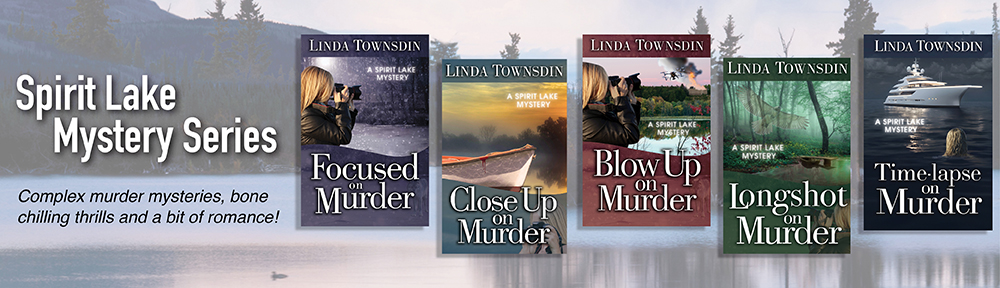
“Resistance is most powerful at the finish line.” It’s true. Right now, I have a finished draft of my mystery, Focused on Murder, and have sent it out to exactly one agent. This section turned a light on my resistance. I fooled myself into thinking there weren’t enough hours in the day to research agents and send out queries and synopses when I wanted to take on the 50,000 words in one month NaNoWriMo challenge. I’ve done great with that and have a first draft of a brand new novel, but my finished novel sits.

Resistance and Procrastination. “Procrastination is the most common manifestation of resistance because it’s the easiest to rationalize. We don’t tell ourselves I’m never going to write my symphony. Instead, we say, I’m going to write my symphony, I’m just going to start tomorrow.”

Resistance and Unhappiness. “As artists and professionals it is our obligation to enact our own internal revolution, a private, insurrection within our skulls.”

Resistance and Healing. “Remember, the part of us that we imagine needs healing is not the part we create from; that part is far deeper and stronger.” The part we create from can’t be touched by anything our parents did, or society did. That part is unsullied, uncorrupted; soundproof, waterproof, and bulletproof. In fact, the more troubles we’ve got, the better and richer that part becomes. The part that needs healing is our personal life. Personal life has nothing to do with work. Besides, what better way of healing than to find our center of self-sovereignty? Isn’t that the whole point of healing?”

I hope you, too, find something in these words that helps you in your writing journey.

Thankful for Notebooks

I’m thankful for just about everything: family, friends, pets, and all the material items that make my life pleasant.

In addition, I’m thankful for notebooks, journals, tablets, sketchbooks of any size, with lines, graphs, or blank. As a lefty, I generally write diagonally across a page, sometimes starting from the back and working to the front, sometimes going upside down or in spirals. I scribble and doodle and make messes all over the page and can barely read what I’ve written. They’re like sand sculptures, precious only in the moment.

A direct link to my heart

Some notebooks are my friends, some are my shrinks, some hold my stories and others tell me their stories. Always, they are my companions. I don’t get out of bed in the morning without writing in one. They tell me how I feel and how to design my day. I keep them in my car, bag, pockets, and other places too. When life gets confused or chaotic, I head to the notebook. It reflects my spirit and reveals my truth.

Who wouldn’t be thankful that so much joy could come from something so simple?

Storyboarding Ideas for NaNo

It’s day thirteen of the NaNoWriMo challenge. My head has been down and fingers flying over the keyboard, and now it’s time to step back and plan ahead.

My characters, setting and first act are in place, I know how it’s going to end and most of the plot elements, but in order to tell my story in a way that will engage my readers and keep them guessing but not confused or bored, I need a guideline.

I prefer a visual roadmap so outlining is not for me. In the past, I’ve used the Mary Carroll Moore W and liked its simplicity and the help it offers with ascending and descending action.

Last March I attended Alexandra Sokoloff’s workshop at Left Coast Crime and immediately bought her book, Screenwriting Tricks for Authors. The grid is more complex but Sokoloff offers lots of good tips and advice.

Most recently, I read a blog post by an author in my Sisters in Crime chapter, who draws the scenes on her storyboard. I’m not an illustrator, but I’m going to try using a combination of Sokoloff’s index card/sticky note method and include drawings of key scenes.

Who says a writer can’t be creatively organized and crank out 1700 words a day? I’m always interested in hearing what works for other writers, and would love your suggestions.

Confuse Your Writing Muscles

I’ve been attending Kaia F.I.T., a women’s exercise program three mornings a week and am now on my fifth week. The philosophy is to confuse the muscles for improved strength and tone. You won’t find giant exercise machines jammed into the room. Sometimes we work with jump ropes or resistance bands or kettlebells or even huge tires. We run, do lunges, sit ups, squats, pushups and all variations of body work, sometimes individually, or with partners, and we often move from station to station, constantly changing from one type of exercise to another. The sessions work our brains as well, keeping track of variations in sequences and repetitions. Afterward, my body aches and yet I feel great because I’ve done something I didn’t know I could do. And I’m getting stronger every day.

What does a woman’s exercise program have to do with a blog about writing? I wondered what would happen if I applied the same philosophy to confuse my writing muscles.

Writers are advised to stick to a writing routine and never let anything deter us. But what if we mix it up and create a writing schedule that changes direction at intervals? I’m going to try it for one week and see what happens.

For example:

  • If you always journal in longhand at 7 am, head to the laptop and do a prompt or write a nonfiction piece
  • If you’re working on memoir, mystery, romance, literary, sci fi, historical, or poetry, do something entirely different like postcard fiction or flash fiction for twenty minutes
  • If you always write alone, call a friend to write with you
  • If you don’t have any writing friends, join a group
  • If you’re in a group, go on hiatus
  • If you write at a desk, take your laptop to the sofa or stand at a counter
  • If you’ve never done NaNoWriMo before, do it. You can start anytime

After a week, check in with yourself. Have you stretched your writing muscles? Are they a little rusty from disuse? Does it feel good to surprise yourself?

In the effort of full disclosure, I can’t take credit for jumping into a rigorous exercise routine all on my own. My daughter talked about how much fun it was and how all ages of women were involved. She encouraged me and invited me to a couple of tryout sessions, and when I was discouraged, she told me everyone had a hard time at first and that I was doing great and she was proud of me.

And that brings me to my last suggestion for today’s blog. If you don’t have someone in your life who pushes you a little, encourages you and believes in you, find someone like that or be that person for yourself.  Now get out there and get confused!