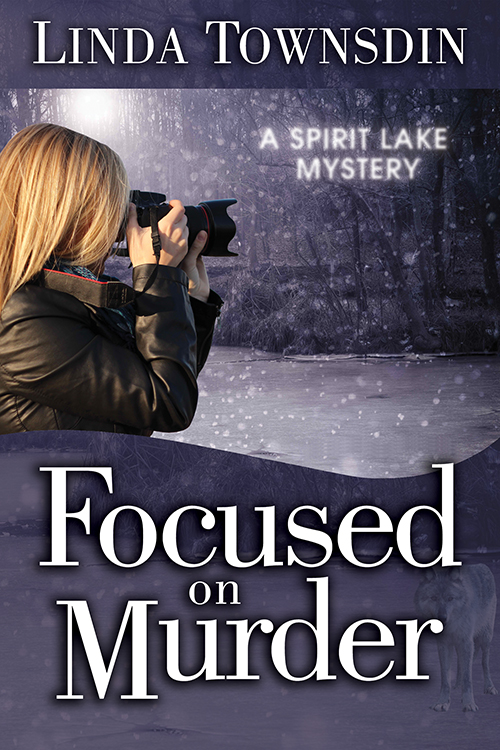
Coming Soon!

The past few months have been a blur of working with my critique group, getting feedback and editing my mystery—Focused on Murder.
There are still a number of steps until I’m published, so I can’t post a date yet, but I hope you’ll check it out when the time comes.
Focused_500x750

The Boot Camp Approach to Writing Discipline

What if, instead of butt in the chair, trusty cup of coffee, perfect space and muse perched above your laptop while you sit for a specific amount of time writing your novel, you take on multiple challenges simultaneously and get your butt kicked? In a good way.

Shoehorning everyone into that old-school scenario no longer works for most of us in today’s short-attention-span culture. That’s why I’m using the cross fit/boot camp/functional fitness method of writing practice.

In my physical workouts, we never do the same thing twice. We don’t concentrate on one muscle for sustained periods, slowly repeating the same movements. We repeat, but almost always at a rapid pace. We get our heart rates up, rest, and keep going until we can’t anymore. We go through lots of different activities in different sequences to keep our minds engaged as well as our bodies. We have to count. Sometimes we work with a partner or a team and sometimes we’re on our own, at our own pace. We get tips on how to feed our muscles through good nutrition, and coaches offer motivational advice. We don’t know what to expect on any given day, but we know it will kick our butts and will be well worth it.

How it translates to my writing practice

This morning, I checked FB, email and Twitter, and honed in on a couple of blogs. One gave me ideas for a creative process to give my writing a boost and a branding site helped me with a strategy for publishing my book. I wrote a scene in one of the novels I’m working on and edited a chapter in another. I wrote a review of a friend’s book on Amazon and commented on a blog post by another. I wrote this blog. After that, my brain turned to jelly so I stopped.

With this method, I work hard and produce results without burning out on one project while neglecting others. I’m constantly getting new ideas and am stimulated to get out of my comfort zone and try new things.

There’s more than one way to work those writing muscles, and for me, surprising myself is what makes it fun. What works for you?

High Concept vs. Heart

It’s the first day of spring and almost Easter, flowers are blooming and leaves are sprouting on bushes. Lots of resurrection going on.

And yet I’m acutely aware that we experience a pretty big chunk of loss in a lifetime and it can happen in any season. The older you get, the more loss you experience. Loved ones die, and there are the other losses; the loss of a job, an opportunity, or maybe even a dream.

In my case, an adored child moved far away. My sadness is tempered with pride and joy as she embarks on an exciting new venture.

Time to Regroup

I set out to find relief and that’s always been through writing. However, at the moment I’ve been concentrating on getting what I’ve written published. I’ve sent my manuscript to agents, but learned that the way to attract an agent is to write a high-concept novel that starts with a bang. My goal was never about tricking an agent into looking at my novel.

I wanted to engage a reader’s heart.

I finally made up my mind the best way to do that was to cut out the middleman and go directly to the source. Now I’m working with a cover artist and will soon self-publish.

Ah, resurrection.

Oh, and I’ve already booked a flight to visit my daughter.

photo

Overcoming Resistance on Your Writing Journey

I bought the book, The War of Art, Break Through the Blocks and Win Your Inner Creative Battles, by Steven Pressfield for a young artist/musician and seeker. I skimmed it and thought the references to war and battle would be attractive to a male. And he loved it. He even read parts of it to me that he thought I’d like. And I did, so I bought a copy for myself and read the entire book in one sitting. I’ve read a number of books about writing motivation, so some of it was familiar, but every time I read something like this, or re-read, it reaches a new place in me that needed to hear it. There were many such places in this book.

The book is written in three sections: Part One, Defining the Enemy; Book Two, Turning Pro; and Book Three, The Higher Realm. Here are a few gems on resistance:

“Resistance is most powerful at the finish line.” It’s true. Right now, I have a finished draft of my mystery, Focused on Murder, and have sent it out to exactly one agent. This section turned a light on my resistance. I fooled myself into thinking there weren’t enough hours in the day to research agents and send out queries and synopses when I wanted to take on the 50,000 words in one month NaNoWriMo challenge. I’ve done great with that and have a first draft of a brand new novel, but my finished novel sits.

Resistance and Procrastination. “Procrastination is the most common manifestation of resistance because it’s the easiest to rationalize. We don’t tell ourselves I’m never going to write my symphony. Instead, we say, I’m going to write my symphony, I’m just going to start tomorrow.”

Resistance and Unhappiness. “As artists and professionals it is our obligation to enact our own internal revolution, a private, insurrection within our skulls.”

Resistance and Healing. “Remember, the part of us that we imagine needs healing is not the part we create from; that part is far deeper and stronger.” The part we create from can’t be touched by anything our parents did, or society did. That part is unsullied, uncorrupted; soundproof, waterproof, and bulletproof. In fact, the more troubles we’ve got, the better and richer that part becomes. The part that needs healing is our personal life. Personal life has nothing to do with work. Besides, what better way of healing than to find our center of self-sovereignty? Isn’t that the whole point of healing?”

I hope you, too, find something in these words that helps you in your writing journey.
Storyboarding Ideas for NaNo

It’s day thirteen of the NaNoWriMo challenge. My head has been down and fingers flying over the keyboard, and now it’s time to step back and plan ahead.

My characters, setting and first act are in place, I know how it’s going to end and most of the plot elements, but in order to tell my story in a way that will engage my readers and keep them guessing but not confused or bored, I need a guideline.

I prefer a visual roadmap so outlining is not for me. In the past, I’ve used the Mary Carroll Moore W and liked its simplicity and the help it offers with ascending and descending action.

Last March I attended Alexandra Sokoloff’s workshop at Left Coast Crime and immediately bought her book, Screenwriting Tricks for Authors. The grid is more complex but Sokoloff offers lots of good tips and advice.

Most recently, I read a blog post by an author in my Sisters in Crime chapter, who draws the scenes on her storyboard. I’m not an illustrator, but I’m going to try using a combination of Sokoloff’s index card/sticky note method and include drawings of key scenes.

Who says a writer can’t be creatively organized and crank out 1700 words a day? I’m always interested in hearing what works for other writers, and would love your suggestions.