Mystery Writer Critique Group

Last Saturday, seven mystery writers from my Capitol Crimes chapter of Sisters in Crime met at Temple Coffee on S St. in downtown Sacramento to figure out the who, why, what, where and how of beginning a mystery writer critique group.

On that breezy spring morning with the daffodils bobbing, I felt ready for something new. Several among our group had been in critique groups in the past and for others, like me, this was a first. Over coffee and Chai tea we got to know each other a little better and talked about the upcoming Left Coast Crime conference this month, our books, published and yet to be, and the critique group.

We didn’t want it to be rigid and rule-bound or too unstructured. Commitment was important. We passed out critique group guidelines.

We gave ourselves several tasks to complete for our next meeting to help us learn more about what we wanted from the group. That prompted me to do some ruminating.

Why do I want to belong to a critique group?

  • Writer friends. Until recently, I have worked in organizations as a writer/editor/communications person. My friends in that environment were wonderful people, but not aspiring fiction writers. Now, I’d like to enlarge my circle with friends who have my same interests. Being in a group that talks about writing for two or three hours at a stretch sounds like heaven to me.
  • You Rock and You Suck.  I need to connect with the real world in my writing and not only my internal world. One inner voice tells me I’m  great and its evil twin tells me everyone is writing mystery novels and they are all more likely to get published than mine, and so on.

What my rational self knows is that neither of these voices speaks the truth. I write because I love it.  Even rewriting and editing. I also want others to like what I write and that’s why I’m joining a critique group. Otherwise, it’s just me and my inner twins: You Rock and You Suck. I need a reality check.

I’d like to hear from those of you who have been in critique groups. What worked for you? What didn’t?

Gearing up for Left Coast Crime

This is a big month for me. I’ll be attending my second conference for mystery writers and fans, Left Coast Crime March 29 – April 1 in Sacramento.  http://www.leftcoastcrime.org/2012/

In 2009, I attended the California Crime Writers Conference in Pasadena, a wonderful first experience. I listened to presentations, filled notebooks with new information and talked with a few people at the banquet. Keynotes Robert Crais and Laurie King are two of my favorite mystery/thriller/suspense authors.

Among her many quotes, Laurie King said:

  • “My name is Laurie King and I write crap.  Is this as good as I can make this crap? Don’t   take yourself seriously, but do take the writing seriously.”
  •  “I don’t really believe in New York.”

With my bookshelf full of how-to books, this was golden advice from Robert Crais:

  • “Only one way to write a novel. Your way.”

An admitted introvert, the scheduled networking cocktail party was event overload for me, so I didn’t attend. Although thrilled with everything I learned, I missed out by not diving into the roomful of strangers, and vowed to do it differently the next time.

This article about Susan Cain’s book Quiet: The Power of Introverts in a World That Can’t Stop Talking on Brain Pickings was great preparation for the Left Coast Crime conference:

http://www.brainpickings.org/index.php/2012/02/20/ted-2012-full-spectrum-reading-list/

Susan Cain says, “Introversion — along with its cousins sensitivity, seriousness, and shyness — is now a second-class personality trait, somewhere between a disappointment and a pathology. Introverts living under the Extrovert Ideal are like women living in a man’s world, discounted because it goes to the core of who they are. Extroversion is an enormously appealing personality trait, but we’ve turned it into an oppressive standard to which most of us feel we must conform.”

Here’s her wonderful TED talk: http://www.ted.com/talks/susan_cain_the_power_of_introverts.html?source=facebook#.T1YwqfLQ5X4.facebook

I’m paraphrasing but this advice stayed with me: When you attend a conference or networking event, make it your goal to make one real friend. You can’t really connect with all those people anyway.

This time, I’ve registered to participate in a day-long workshop, submitted pages for review and volunteered as a panel room monitor. But I’m also hoping to make one new friend to share my writing interests with, and maybe even connect with an agent!

Left Coast Crime is for mystery readers and writers. Check it out!

http://www.leftcoastcrime.org/2012/

Practicing Postcard Fiction

My post today is about practicing a new form of writing. New for me, that is. Postcard Fiction. Last week someone liked my post so I clicked on her icon. That led me to this wonderful blog:

http://postcardfiction.com/

I loved the combination of photos and fifty-word parameter for each story and wanted to try it. Hope you like it and if you have similar sites to recommend, please do!

Filling the Well

A crescent, an arc of landscape cradling an ocean, holds her.                                Waves entice her toes, grateful for the lick.                                                                         A crescent, an arc of landscape, a lick, and what was empty overflows.

How NaNoWriMo Changed My Writing Habit

I read a fascinating article in the New York Times Sunday magazine about how Target goes to great lengths to pinpoint our buying habits.

http://www.nytimes.com/2012/02/19/magazine/shopping-habits.html?_r=1&pagewanted=all

What really stayed with me was the research about how our habits develop. It made me wonder if I could apply that information to understand why my writing habit changed after the NaNoWriMo challenge last November.  http://www.nanowrimo.org/

I wrote 2,000-plus words a day for a month during the nano challenge. Before that, I could be distracted by anything, even housework. It took me two years to write the 90,000-word mystery novel I’m finishing now, and about forty-five days to write 85,000 words of a new mystery using the nano schedule.

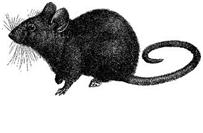
The Times article offered insight in the form of a three-step formula for creating a habit. Cue, Routine, Reward. And the author even put it in terms I could relate to by using an example of a chocolate-seeking rat.

I applied that formula to explain what happened to my writing output during nano. My cue: open my laptop; my routine: write until I hit the daily number; and my reward: watch the total number of words substantially increase each day. Deeply satisfying.

Beginner’s Mind

Beginner’s mind is what I loved about the NaNoWriMo process. It reminded me of my first mystery. I wrote it in a few months and had fun with it. I rarely stopped to edit, simply enjoying getting the story and characters on the page. But my novel didn’t attract any agents. This was before the self-publishing and eBook phenomenon. I put it in a drawer and tried again.

The next time I made sure all the parts fit before moving on to the next what if. I edited as I went. I agonized over every word, toggling between the creative mind and editor’s mind. No wonder it took so long. Now it’s being reviewed by colleagues. So far, I’ve had good feedback so the effort was worth it even though I did it the hard way.

I’m excited about digging back into my nano rough draft. Granted, writing the nano way is probably easier if you’re working with a series as I am. I already knew my core characters and setting.

How did the Nano cue, routine, reward process change my writing habit long-term?

Every day, I open my laptop, I get my writing done, and I feel good about it. Everything else is secondary. Keeping track of words might seem mechanical, but having a goal keeps me going and when I run out of ideas generated by my brain, my inner self speaks. That’s when my best writing happens.

I’d like to hear your thoughts on what influences your writing habit.

My First Time

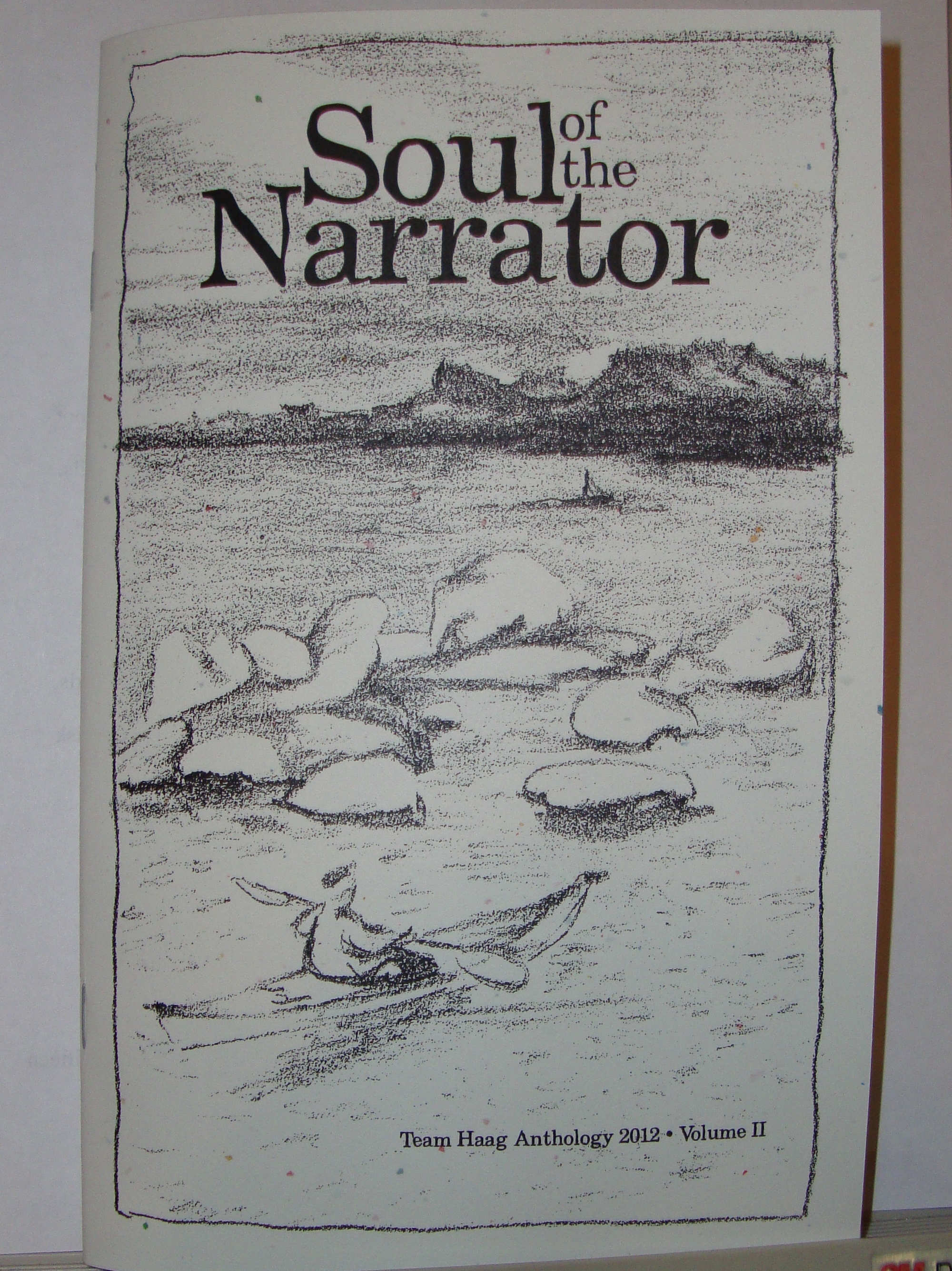
What I expected: A tiny, cold tin building where fifteen or twenty people huddled in a circle in metal chairs to read from the ‘zine Jan Haag and Laura Martin put together from the drafts we wrote from prompts during our Friday and Saturday Amherst Writers & Artists group meetings.

What happened: The warm and inviting space was filled with all ages of writers and their supporters: friends, spouses and significant others who knew each other as old friends. I stopped counting at forty people. Local artists’ paintings lined the walls. People helped themselves to cookies and drinks. Latecomers happily stood at the back as Jan Haag, leader of the Friday and Saturday groups introduced each of the nineteen writers to come to the mic and read their own words from The Soul of the Narrator.

How I felt: Anxious. Would I measure up? Jealous, at first. I’m new to the group and didn’t know many people. I started to slide into that old familiar feeling of not belonging when I realized I did belong. Each person there had a first time just like me. Maybe I didn’t know everyone, but I knew my Friday group. My dog story wouldn’t be as good as some of the wonderful poets and writers in the room, but they would welcome me anyway. I knew that instinctively.

I had reluctantly agreed to read my piece at Jan’s coaxing. She said, “We’d really like it if you would read.” I’m uncomfortable in front of a group, but if Jan had asked me to stand on my head and sing opera I would have done it. She has a super power; the power of compassion.

How it ended: I read. People smiled and clapped. I went home and ate chocolate and thought about the writing group that led to my doing something I had never done before.

I’ve been working on writing a mystery series for several years. Very few people have seen my drafts. The process of writing a mystery is all about what happens next. The Friday night writing from prompts is all about what happens now. Even if it triggers past memories or imaginative flights of the future, it’s filtered through what’s in our hearts at that moment. I’ve been known to hide my feelings from myself, let alone strangers, and there I am, every Friday night writing from that place, the heart. Those glimpses of my truth make me a more honest writer, and every writer in our group inspires me with their own soul-filled writing.

It’s clear to me why many of the people who gathered at the Poetry Center on Saturday night have attended Jan’s writing groups for so many years. After a long week, where we are engaged in activities with responsibilities to others or to our outer needs, we can gather to return to our own souls to feel what’s happening now, where it always feels like the first time.