Step Away from the How-to-Write Book

At the Left Coast Crime Conference, I had the good fortune to attend a self-editing workshop by a respected editor in the publishing industry. We had the option of sending in an advance chapter of our work for her to review and possibly use in the workshop. I’d submitted mine and she used it so she was familiar with my project. After the workshop, I asked if she would critique my novel. She agreed, and the process was set in motion.

However, once I crossed that threshold I panicked. The manuscript I’d worked on for two years was not ready. I galvanized into action. I attempted to re-read every how-to-write book in my vast arsenal and apply every word of advice to my novel. For example, I found a list of extraneous words to watch out for and in a frenzy rooted out all fifty listed. I eradicated so many connecting words I had to add them back in for the sentences to make sense.

I read a book on chapter arrangement and rearranged all my chapters. I read a book about point of view and almost changed my story to third person. And the voice was all wrong. Luckily, the voice of reason stopped me just in time.

I dug into those how-to-write books like my bookshelf was a tool box and tried to hammer, chisel, and knock down an already sound structure. What did I learn?

Sometimes you can try too hard.

 My manuscript was ready to go. That’s why I approached an editor to critique it. I already had it as good as I could get it. I was just afraid.

Don’t get me wrong. I love my how-to-write books. I enjoy reading them and learning from them. They teach and inspire and make me a better writer. They comfort me. They give me confidence. But the information has to be absorbed when the time is right, when I need it. Not when I tear through them like I’m pulling an all-nighter cramming for a final exam because I’m not prepared. I am prepared.

In fact, I might write a nonfiction book next:  Too Much Self-editing can be Self-defeating

Postcard Fiction #3

Resurrection
I am here.
Parched, scorched, starved.
Battle-scarred waxy petals
Chewed on like a prizefighter’s ears.
You want a piece a me?


Blissed Out over Books

The Left Coast Crime (LLC) writer’s conference is over. I’m back to my daily life, sitting at my laptop with my old dog wheezing on the rug next to me and my nearly toothless cat curled up on a chair. I’m surrounded by books and piles of papers that I never manage to tame. My quiet world.

Over the years, I’ve attended many conferences, symposiums, workshops and training events wearing my corporate editor/writer/communications hat. I worked hard, learned a lot, but was more than ready to return to my daily life when it was over.

Something strange happened this time.

After four intense days and evenings of workshops, panels, volunteering and socializing at LLC, I was overwhelmed, overstimulated and exhausted from navigating through 600-plus attendees. And I dreaded it ending.

I was blissed out at all those mystery writers, fans, librarians and experts in the publishing world gathered in one place—all those beginning, mid-career and seasoned writers encouraging each other, sharing how they got started and what to do and not do, what success is like, and helping us to understand all the changes happening in the industry.

A love fest

It was a gathering of people who love books. They love books so much they feel compelled to write them. It was about fans who love books so much they want to celebrate their favorite authors and learn about new ones. Why would anyone want that to end?

Writing a Pitch is a Bi***

I recently wrote about the upcoming Left Coast Crime conference in Sacramento. I’m participating in a workshop on story structure. The workshop leader, author Alexandra Sokoloff, asked us to send the premise of our mystery before Thursday.

Easy enough.

Write a one-sentence summary of a 300-page novel that hooks the reader. We’ve all seen them on book jackets, New York Times best-seller lists and movie blurbs.

I sought out some fresh examples and set out to write it. The form has many names: hook, logline, premise or pitch.  Some are no more than 15 words. Some don’t use character names. My writing group said they liked it better with the name of my protagonist.

It was hard.

Four days later, I finally had it down to two sentences and more than 45 words. Here’s the result of my effort.

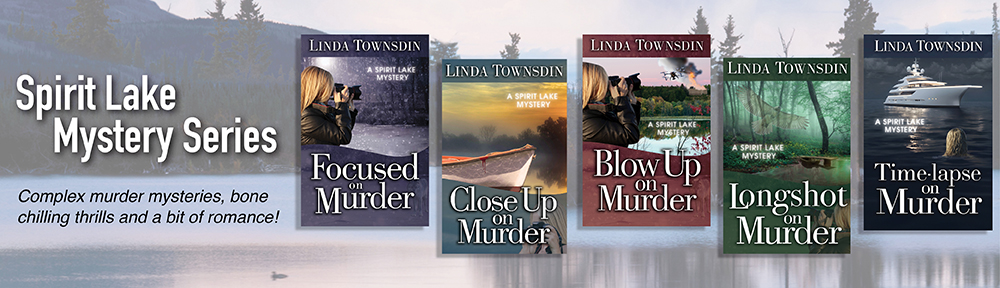
Focused on Murder
A Spirit Lake Mystery

Britt Johansson is a star newspaper photographer whose reckless behavior nearly ended her career. She gets a chance to redeem herself when she’s working in Northern Minnesota and stumbles across an international crime ring that ultimately pits her and her brother against a deranged killer determined to destroy them.

If you like it, please hit the Like button. If you have suggestions, I’d love to hear them.


Postcard Fiction #2 Miss Communications

Choosing wrong words

She sends a text, attempting

To bolster, encourage.

A mistake

To assume a problem

Where there was none.

She falters

But no offense is taken.

Released from the pressure,

Of manager of the universe,

She takes a walk on the river.